

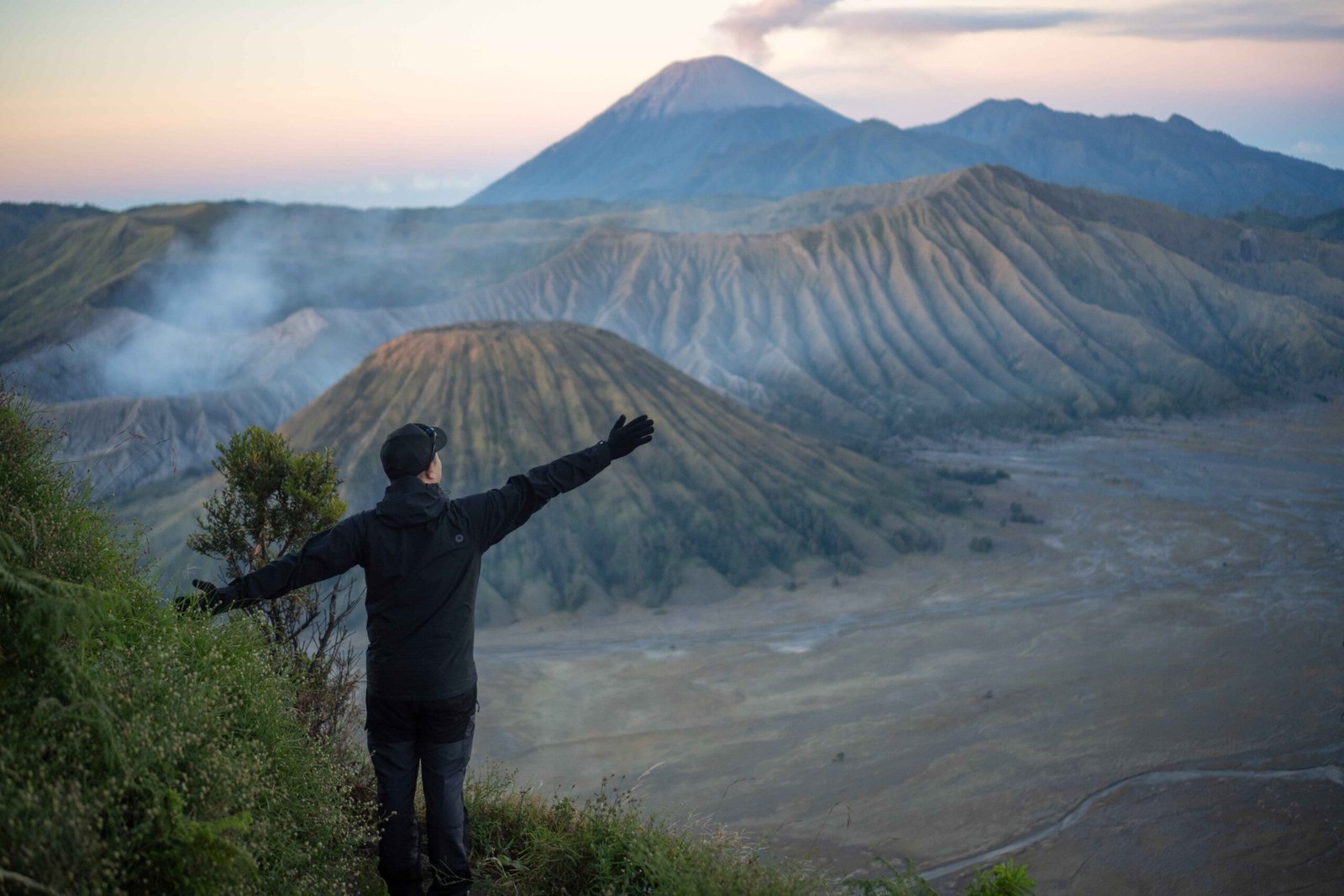
Mastering Mount Bromo photography requires more than just arriving before sunrise; it demands knowing exactly where to set up your gear. While thousands of tourists crowd the popular observation decks, you can easily find a breathtaking Bromo view point all to yourself.
Instead of battling for tripod space, you can discover a quiet ridge with a direct line of sight to the smoking crater. Furthermore, exploring the lower caldera reveals a massive, empty stretch of volcanic sand that provides an otherworldly backdrop. By shifting your perspective, you will capture truly unique, majestic images of this iconic Indonesian volcano.
Table of Contents
- Kingkong Hill Bromo Hidden Corners Photography
- The Whispering Sands Photography
- The Aerial Advantage
- The Golden Savanna
- The Crater Rim
- Practical Prep & Mount Bromo Photography Gear
Kingkong Hill Bromo Hidden Corners Photography

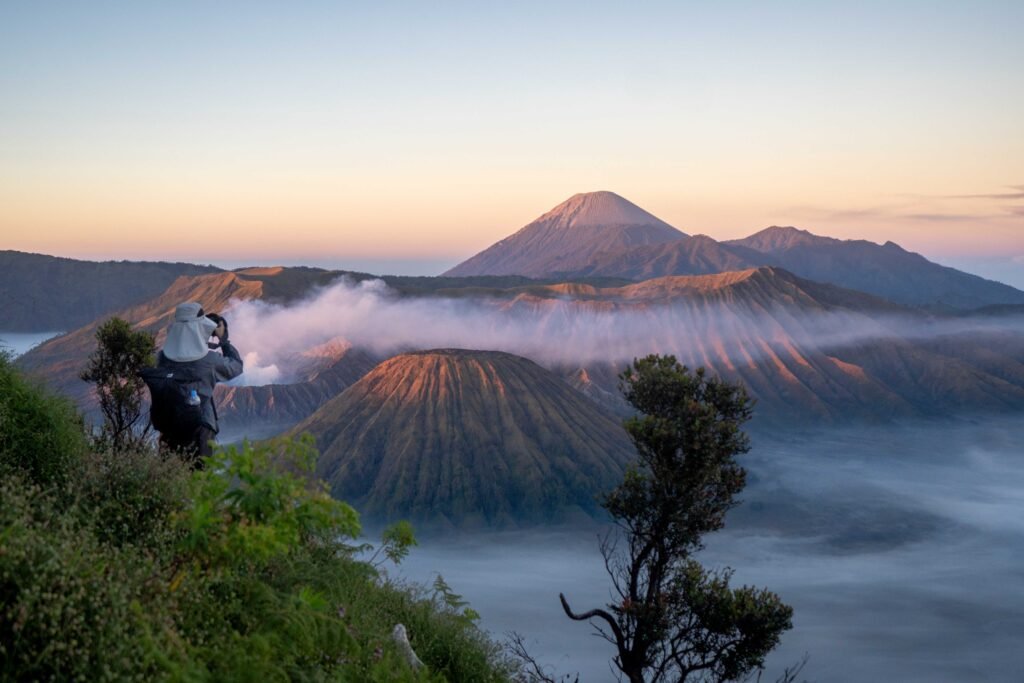
Most photographers instinctively rush to the main Penanjakan observation deck hours before dawn. However, you can secure significantly better angles for your Mount Bromo photography by exploring the hidden trails along Kingkong Hill. This specific area continuously offers stunning, unobstructed panoramas without the chaotic, shoulder-to-shoulder crowds.
Furthermore, navigating these secluded corners allows you to seamlessly experiment with unique foreground compositions. You can easily incorporate dramatic silhouetted pine trees or rugged volcanic terrain into your early morning shots. Consequently, your travel portfolio will feature highly distinct perspectives rather than the standard, repetitive tourist snapshots.
Therefore, arriving just slightly earlier than the main jeep convoys gives you a massive creative advantage. You can thoroughly scout the perfect vantage point and set up your tripod peacefully. Ultimately, this strategic approach guarantees phenomenal visual results as the first golden light breaks over the majestic caldera.
The Whispering Sands Photography
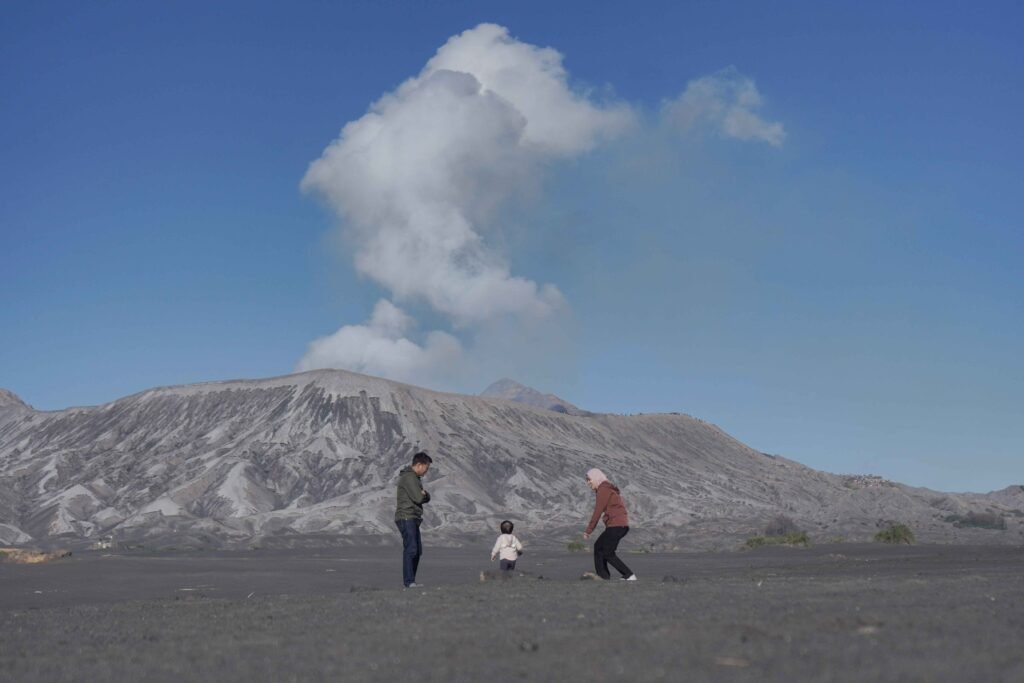
After capturing the magnificent sunrise, immediately descend into the Sea of Sand before the harsh midday sun arrives. The Whispering Sands (Pasir Berbisik) provides a spectacular, minimalist landscape that beautifully contrasts with the towering caldera walls. Here, the sweeping dunes and wind-swept textures create an incredibly atmospheric setting for your Mount Bromo photography compositions.
Furthermore, utilizing a telephoto lens effectively compresses the vast distance between your subject and the distant mountain ranges. You can easily isolate lone jeeps, galloping horses, or solitary figures against the expansive volcanic ash. Consequently, this specific technique adds a profound sense of scale and cinematic mystery to your visual narrative.
Moreover, maintaining a low shooting angle perfectly highlights the intricate, rippling patterns formed by the wind across the dark sand. Always remember to attach a polarizing filter to cut through the atmospheric haze and deeply enrich the blue sky. Ultimately, this expansive area highly rewards photographers who patiently appreciate subtle details and sweeping vistas.
The Aerial Advantage For Mount Bromo Photography

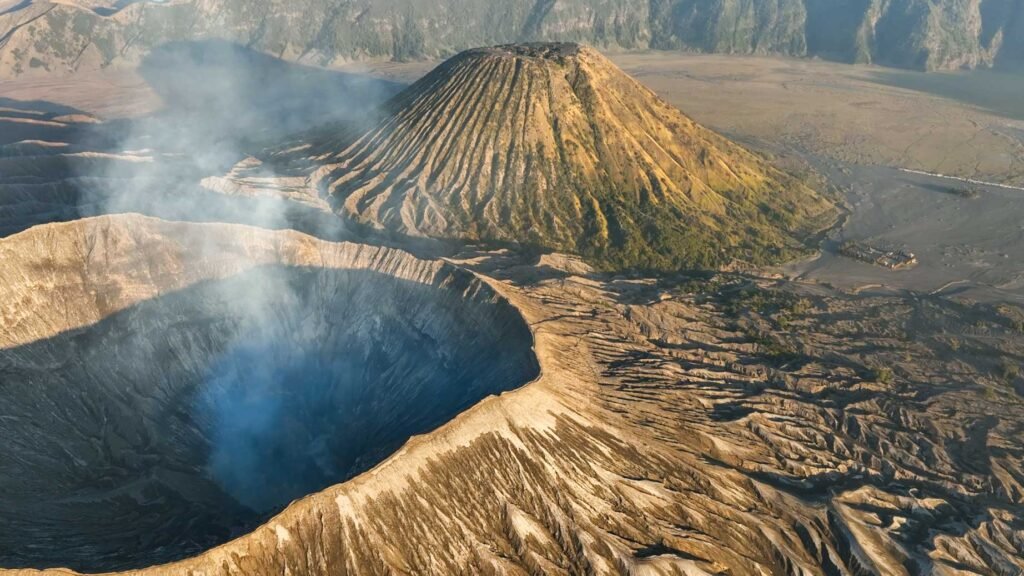
Flying a drone over the Bromo caldera provides breathtaking, sweeping perspectives that ground-level shots simply cannot match. When planning your Mount Bromo photography, operating aerial equipment at such high volcanic altitudes presents unique environmental challenges. Pilots must constantly monitor strong, unpredictable wind currents and the thin air density that heavily impacts battery life.
Therefore, packing lightweight but powerful gear becomes absolutely essential for a successful flight. If you review the DJI Mini 3 Pro specs, you will quickly notice how modern compact drones effortlessly handle these demanding conditions. Furthermore, their advanced stabilization systems ensure crisp, cinematic footage even when sudden gusts hit the crater rim.
Always check local flight regulations and respect restricted zones around the active smoking vent before taking off. Additionally, launching your drone during the cooler morning hours significantly reduces the risk of motor overheating. Consequently, you will safely capture mesmerizing top-down views of the massive caldera and its surrounding lush valleys without risking your equipment.
The Golden Savanna Bromo View Point
As you leave the desolate ash fields, the landscape suddenly transforms into the lush, rolling hills of the caldera. This vibrant Golden Savanna provides a striking visual contrast to the dark, moody volcanic crater you photographed earlier. Consequently, discovering this alternative Bromo view point allows you to capture entirely different, vivid color palettes within just a short drive.
To achieve the absolute best lighting, you must time your arrival perfectly for the mid-morning hours. During this specific window, the sun vividly illuminates the undulating landscape, beautifully highlighting the rich green and golden grasses. Furthermore, the harsh early shadows vanish, which allows your camera sensor to capture incredible dynamic range effortlessly.
Always look for leading lines naturally formed by the winding dirt paths intersecting the hills. You can also frame local horse riders against the sweeping grassy slopes to add dynamic human elements to your composition. Ultimately, this vibrant location deeply enriches your photography portfolio with unexpectedly bright and lively environmental shots.
The Crater Rim
Most tourists rush to climb the steep crater steps immediately after sunrise, which inevitably creates massive, frustrating traffic jams. However, you can easily avoid this bottleneck by employing a simple “mid-morning shift” strategy. By delaying your hike until around 9:00 AM, you will encounter a significantly emptier path up the volcano.
Consequently, having the narrow viewing area mostly to yourself allows you to compose your shots meticulously. You can safely position your camera gear at this dramatic Bromo view point without constantly bumping into impatient crowds. Furthermore, the higher morning sun beautifully illuminates the deep, steaming vent, revealing striking, colorful sulfur textures along the inner walls.
Always prioritize your personal safety when navigating the unguarded sections of the steep rim. Utilize a wide-angle lens to capture the immense scale of the roaring abyss against the surrounding barren landscape. Ultimately, this delayed approach dramatically improves both your safety and your overall creative experience at the active vent.
Practical Prep & Mount Bromo Photography Gear
To protect your valuable equipment from the ubiquitous fine dust, proper preparation is absolutely crucial before arriving at the national park. You must actively shield your camera body and lenses from the abrasive volcanic ash constantly blowing across the caldera. Therefore, always wrap your sensitive gear in specialized rain covers or simple weather-sealed bags when you are not actively shooting.
Additionally, strictly avoid changing lenses outdoors unless you are entirely sheltered from the harsh, unpredictable wind. Bringing a reliable blower brush and microfiber cloths will help you safely remove stubborn dust particles during your trip without scratching the glass. By diligently maintaining your equipment, you ensure flawless mechanical performance and perfectly sharp images throughout your entire journey.
In conclusion, executing perfect Mount Bromo photography requires careful planning, strategic timing, and a strong willingness to explore beyond the crowded observation decks. Whether you seek panoramic sunrises or vast minimalist desert landscapes, this majestic Indonesian volcano offers endless creative possibilities. If you are ready to elevate your visual portfolio, pack your essential gear, apply these specific techniques, and start booking your unforgettable volcanic adventure today!


